Welcome to the Van Buren Street Corridor Online Workshop
Hi, we’re glad you’re here!
How to Participate
Please review each slide to learn more about the corridor.
BRT 101
BRT - What You Need to Know
Phoenix voters approved Transportation 2050, a 35-year citywide transportation plan, which included Bus Rapid Transit (BRT). BRT is a high-capacity bus service that provides a fast, reliable, and convenient transit experience that’s coming to Phoenix! A BRT system is unique because it can be planned and designed to best meet the needs of the community.
BRT Elements
These elements are commonly found in successful BRT systems and will be included in Phoenix’s first BRT corridor.

Frequent service
Enhanced bus stations
Transit spot improvement

Dedicated lanes
New, larger buses
Level boarding
All door boarding

Enhanced fare collection system

Increased reliability
Overview
The City of Phoenix BRT Program is moving forward!
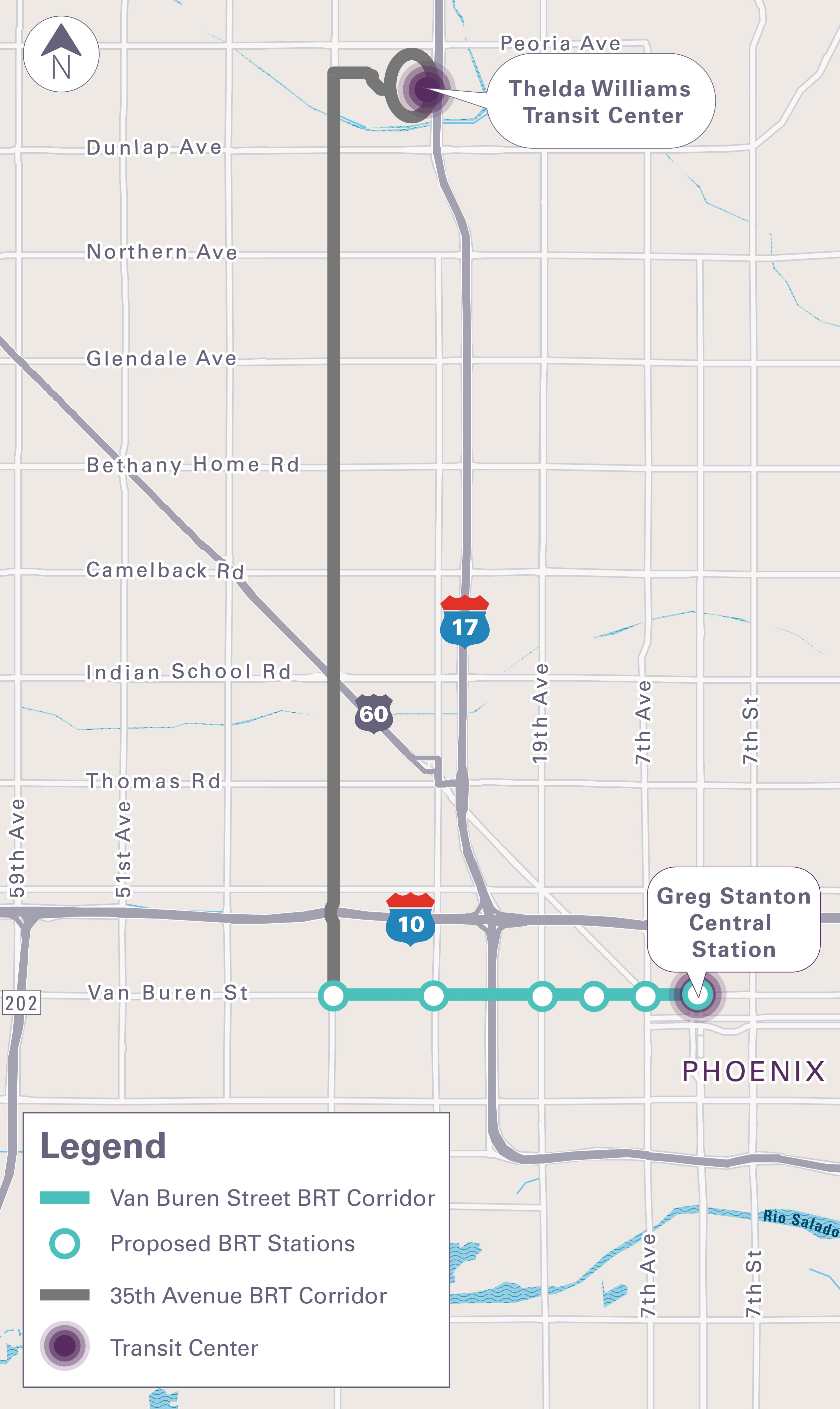
The first corridor has been approved on 35th Avenue and Van Buren Street. In Spring 2025, outreach efforts focused on 35th Avenue between Van Buren Street and Cheryl Drive. Through extensive outreach to community members, council members, and elected officials, center-running BRT was selected for 35th Avenue and 15% design is underway.
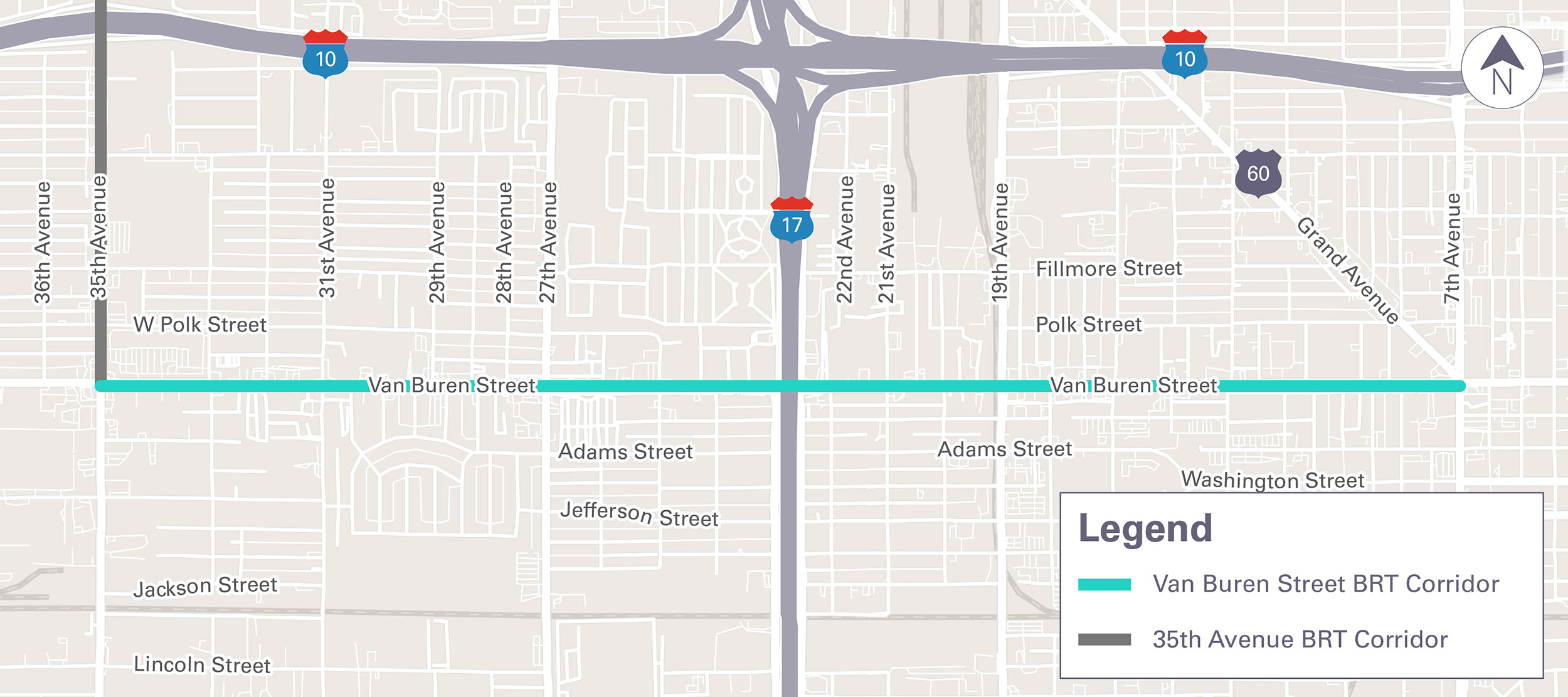
Now we need your input on selecting a BRT lane option along the Van Buren Street Corridor. Between 35th Avenue and 7th Avenue, there are two lane options, one with dedicated bus lanes in the curb lane (side-running) and one with dedicated bus lanes in the center of the road (center-running).
Our Process
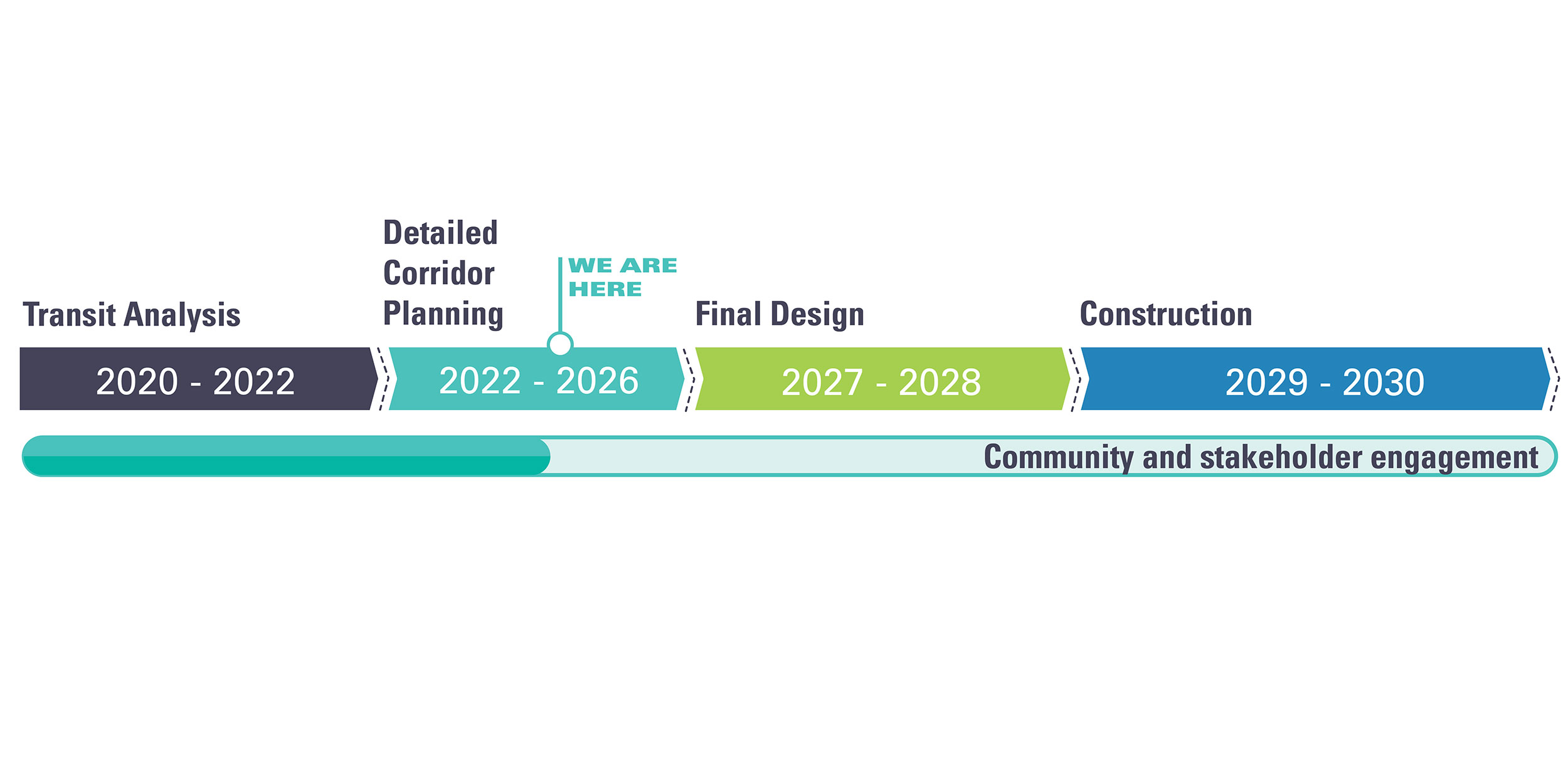
Where we are...
In fall 2025, we will be focusing on the Van Buren Street portion of the corridor, finalizing the preferred lane option to continue moving the project forward into design.
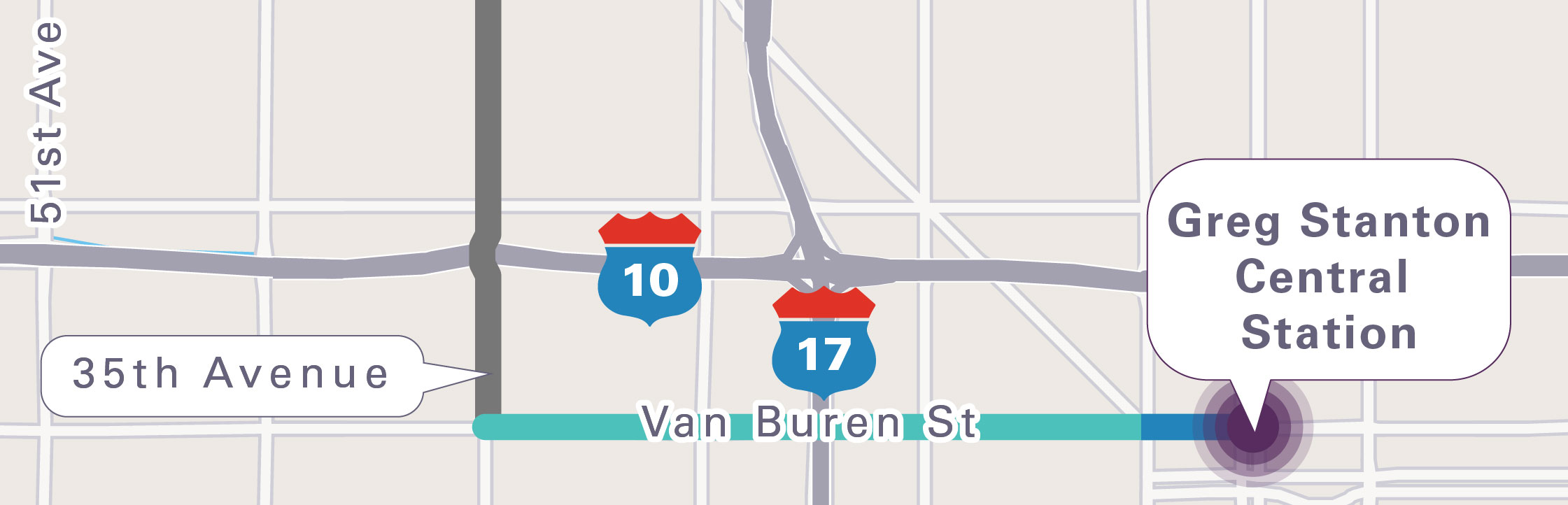
7th Ave. to Central Ave.
The section of the Van Buren Street Corridor between 7th Avenue and Central Avenue (shown in dark blue in the map below) will incorporate mixed-running BRT due to limited roadway width, existing building infrastructure, and right-of-way impacts. Mixed-running means the BRT buses will operate in the same traffic lanes as regular cars and other vehicles.
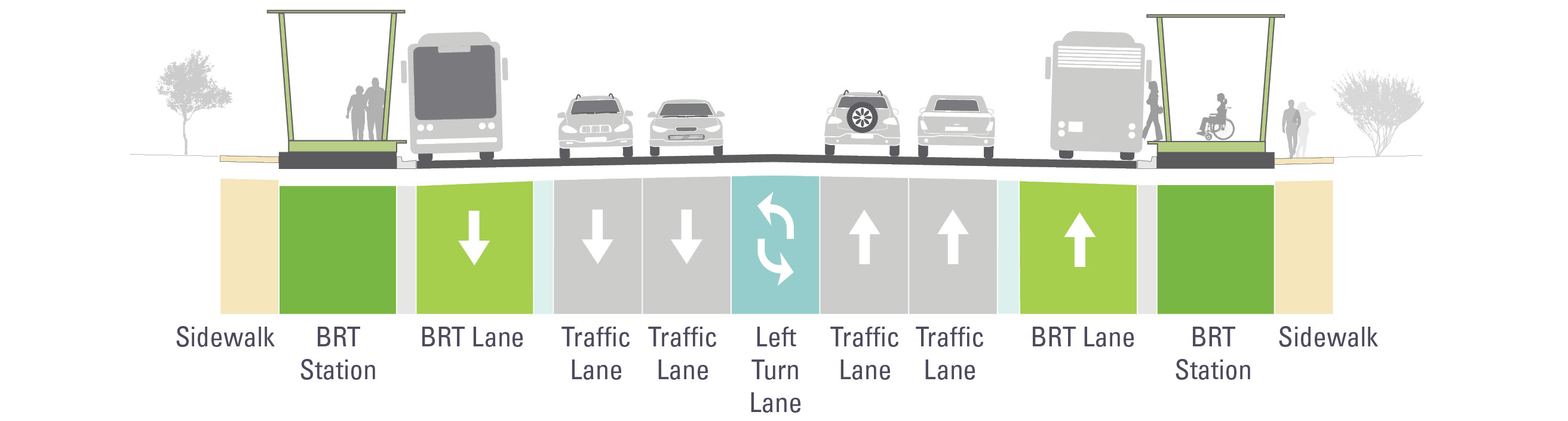
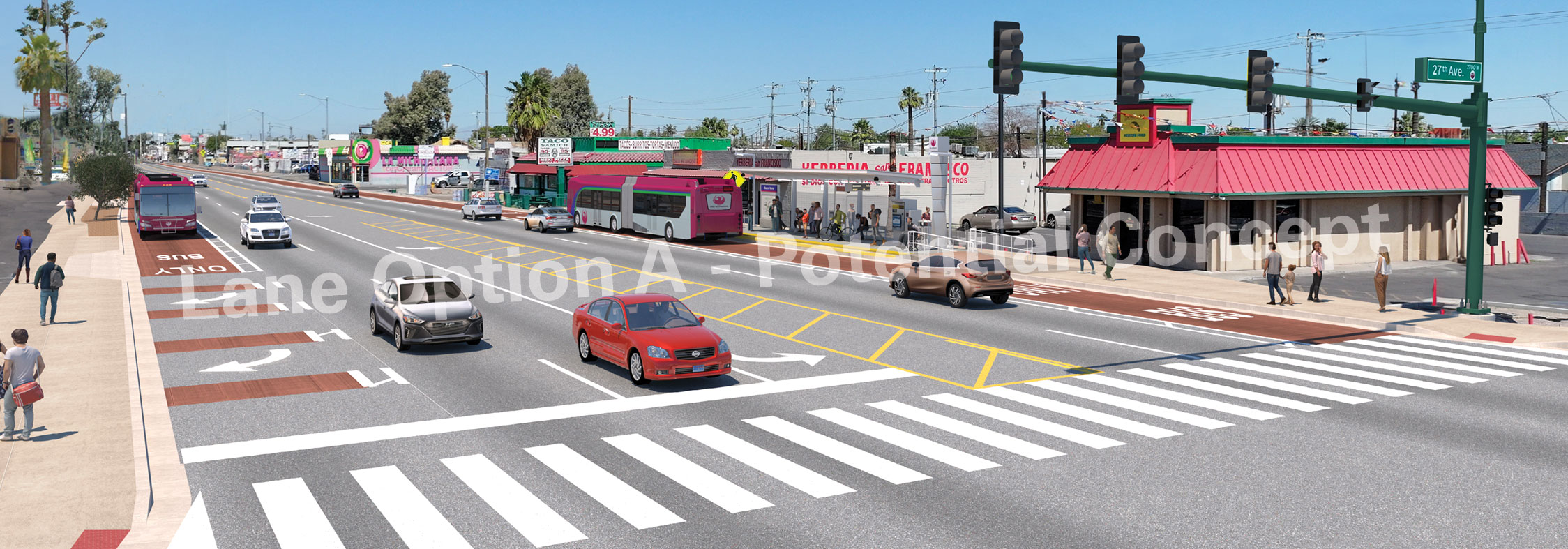
Lane Option A: Side-Running BRT
Lane configuration for side-running BRT along Van Buren Street at a signalized intersection where BRT stations are proposed.
 (opens in a new tab)
 (opens in a new tab)
Click here for Spanish version
Considerations
-

Dedicated BRT Lane Use:
Local buses can use the BRT lane and general traffic can make right-turns from the BRT lane -
Roadway Width:
Requires more road width -
Pedestrian Access:
Station access is on the sidewalks, creating longer pedestrian crossings through intersections -
Right-of-Way Impacts:
More potential right-of-way impacts to residences and businesses -

Travel Time:
Slower travel times and less reliable due to impacts from right-turning general traffic and local bus -

Left-Turn Movements/Access:
Drivers can make left-turns throughout the corridor
Lane Option B: Center-Running BRT
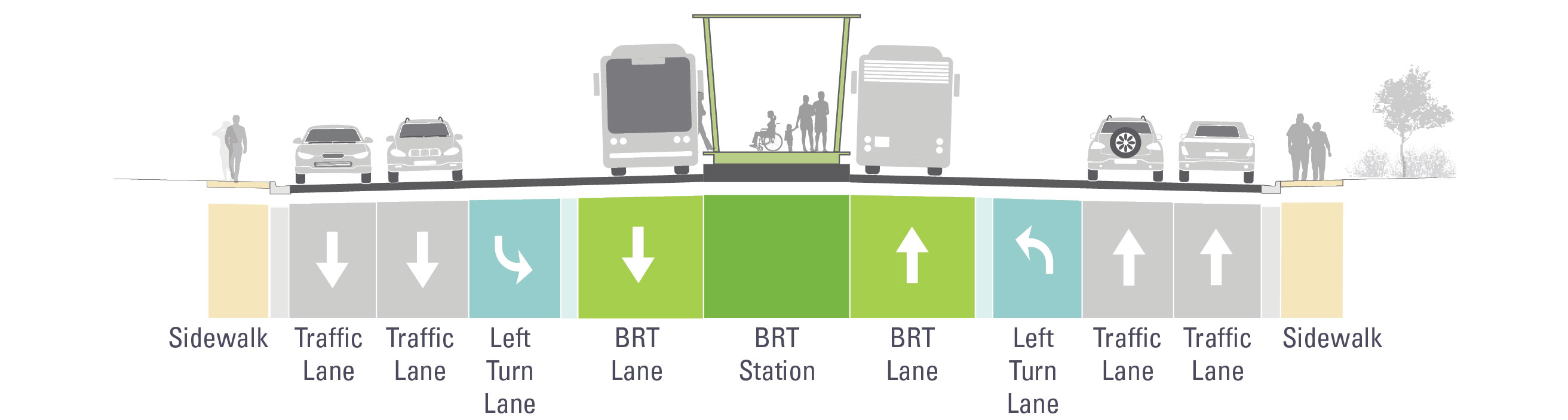
Lane configuration for center-running BRT along Van Buren Street at a signalized intersection where BRT stations are proposed.
 (opens in a new tab)
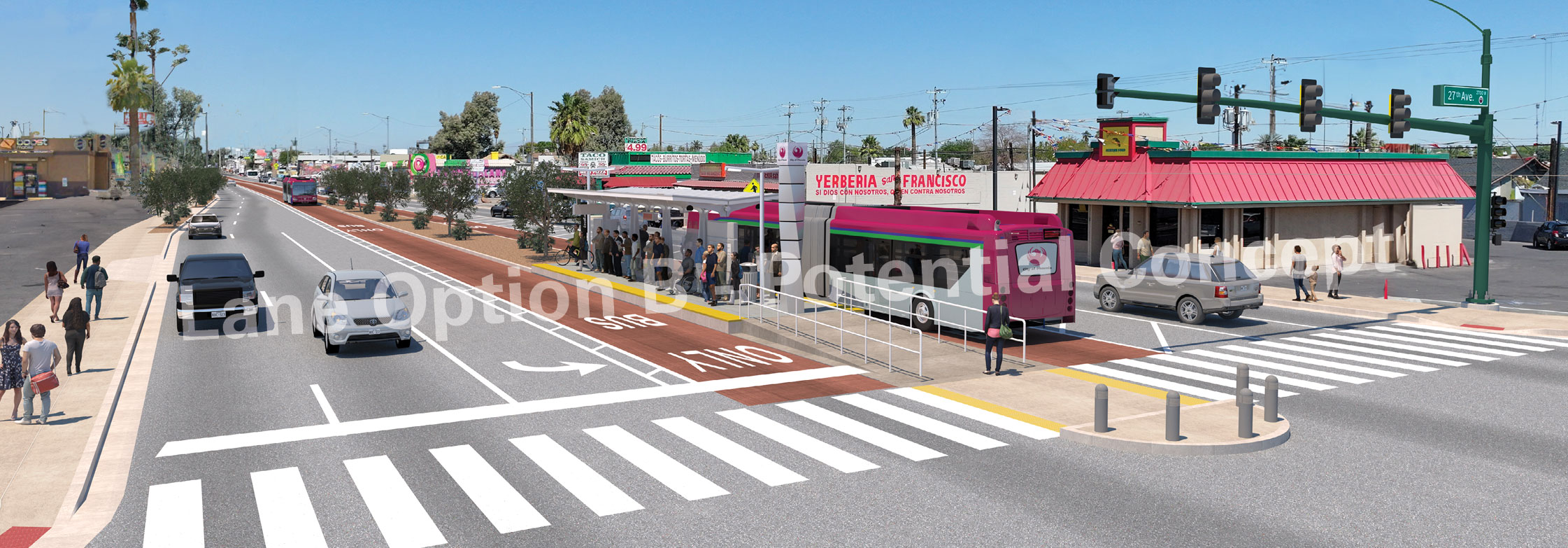 (opens in a new tab)
Click here for Spanish version
Considerations
-
Dedicated BRT Lane Use:
Only BRT buses are allowed in the BRT lane -
Roadway Width:
Requires less road width -
Pedestrian Access:
Station access is in the center of the road, creating shorter pedestrian crossings through intersections -
Right-of-Way Impacts:
Less potential right-of-way impacts to residences and businesses -
Travel Time:
Faster travel times and more reliable due to the elimination of general traffic impacts -
Left-Turn Movements/Access:
Drivers can only make left-turns at signalized intersections throughout the corridor, due to bus traveling in the center of the road
Side-Running vs. Center-Running
Lane Option A - Side-Running
(opens in a new tab)
(opens in a new tab)Lane Option B - Center-Running
(opens in a new tab)
(opens in a new tab)Lane Options
The chart below compares the considerations for each lane option.
| Consideration | Lane Option A: Side-Running BRT | Lane Option B: Center-Running BRT |
|---|---|---|
|
Dedicated BRT Lane Use
|
Local buses can use the BRT lane and general traffic can make right-turns from the BRT lane | Only BRT buses are allowed in the BRT lane |
|
Roadway Width
|
Requires more road width | Requires less road width |
|
Pedestrian Access
|
Station access is on the sidewalks, creating longer pedestrian crossings through intersections | Station access is in the center of the road, creating shorter pedestrian crossings through intersections |
|
Right-of-Way Impacts
|
More potential right-of-way impacts to residences and businesses | Less potential right-of-way impacts to residences and businesses |
|
Travel Time
|
Slower travel times and less reliable due to impacts from right-turning general traffic and local bus | Faster travel times and more reliable due to the elimination of general traffic impacts |
|
Left-Turn Movements/Access
|
Drivers can make left-turns throughout the corridor | Drivers can only make left-turns at signalized intersections throughout the corridor, due to bus traveling in the center of the road |
35th Ave. to 7th Ave.
There are multiple projects that impact the Van Buren Street Corridor and will be considered when determining the BRT lane options. The BRT project team will continue to collaborate with various agencies and projects throughout the design of the corridor.
The Van Buren Street BRT lane options between 35th Avenue and 7th Avenue will need to consider other potential improvements in the area, including:
- ADOT I-17 freeway crossing improvements
- Improvements at the ground-level crossing of the BNSF Railway, west of 19th Avenue
- Valley Metro I-10 West Extension light rail alignment on Van Buren Street east of I-17
- Improvements to the 7th Avenue/Grand Avenue/Van Buren Street intersection